Accessible Air Travel - A Guide for People
with Disabilities
Although air travel today is available to
most people, barriers to access still exist. A passenger with
a disability may encounter obstacles just to reach an airplane
seat. To eliminate these hindrances, the federal government
passed the Air Carrier Access Act of 1986 (ACAA). It is vitally
important for travelers with disabilities and their companions,
travel agents, and others involved in air travel to know what
to expect from the time an airline reservation is booked to
the moment the flight touches down. The ACAA affects all aspects
of air travel. This booklet provides people who use wheelchairs
and other mobility aids with all the information they need
to have a safe and enjoyable flight.
Air Carrier Access Act
The ACAA prevents airlines from discriminating
directly or through a contractual arrangement against people
with disabilities. Under the law, new and renovated terminals
must be designed to be accessible by people with disabilities.
Fully accessible services must also be provided in all existing
airport facilities that air carriers own, lease, or control.
The ACAA affects all domestic air carriers and all airport
facilities within the United States and its territories, possessions,
and commonwealths.
As of September 1, 2000, the ACAA was amended
to cover foreign air carriers operating in the United States.
The rules implemented to enforce the ACAA will be amended
to reflect this change.
The ACAA prohibits airlines from requiring
a person with a disability to accept special services, such
as preboarding, that the passenger did not request. Similarly,
air carriers cannot segregate passengers with disabilities,
even if separate or different services are available to them.
Making Reservations
Refusal of Service
Are air carriers permitted to refuse
to serve a qualified person with a disability?
It is illegal for air carriers to refuse
to provide transportation to a qualified individual with a
disability based solely on his or her physical or mental condition.
To be qualified, a person with a disability must be able to
purchase a ticket, get to the airport, and meet the contract-of-carriage
requirements that apply to all passengers. Air carriers may
refuse to provide transportation to any passenger based on
safety and Federal Aviation Administration (FAA) regulations,
but they must do so in a manner that does not discriminate
based on disability. Air carriers cannot limit the number
of people with disabilities on a given flight.
What must an air carrier do if it refuses
to provide service to any person on the basis of a disability?
The air carrier must give the passenger
a written explanation for the refusal, including, where appropriate,
the safety basis for the decision. The air carrier must provide
its explanation within 10 calendar days of the incident.
Advance Notice Requirements
Does a person with a disability need
to notify an airline in advance of his or her intention to
travel or of his or her disability?
Generally, carriers cannot require advance
notice. An airline is, however, permitted to require that
the passenger provide up to 48 hours advance notice and check
in 1 hour in advance for the following accommodations:
- using medical oxygen on the plane, if
this service is available
- transporting an incubator, if this service
is available
- connecting a respirator to the aircraft
electrical supply, if this service is available
- transporting a passenger who must travel
on a stretcher, if this service is available
- transporting an electric wheelchair
on planes with fewer than 60 seats
- providing packaging for a battery for
a wheelchair or other assistive device
- accommodating 10 or more qualified people
with disabilities who make reservations and travel as a
group providing an on-board wheelchair on a plane with more
than 60 seats that does not have an accessible lavatory
What are an airline's responsibilities
after a person with a disability gives advance notice of his
or her needs?
Airline reservation and administrative systems
must keep records of properly provided advance notice. Carriers
must inform the employees responsible for arranging for the
necessary accommodations and must ensure that the services
are provided.
What happens if an individual with a
disability does not provide advance notice or does not check
in at the airline terminal an hour in advance as required
under the ACAA?
In these cases, the carrier must provide
the accommodation or service if it can be done with reasonable
effort and without delaying the flight.
Seating Assignments
May an airline refuse to allow a person
with a disability to sit in a particular seat?
Airlines cannot exclude passengers with
disabilities from a particular seat or require them to sit
in a certain seat, except to comply with FAA safety regulations,
such as exit row seating.
What are the FAA regulations concerning
seating next to emergency exits?
The FAA requires air carriers to determine,
in a nondiscriminatory manner, if a passenger can perform
the duties required of someone sitting in an exit row. Passengers
seated in exit rows must be able to perform the following
emergency functions:
- locate the door and quickly follow oral
and written instructions
- determine when to open the door
- open the door
- move quickly through the open exit
- devote full attention to the emergency
task
Under FAA regulations, an airline cannot
deny transportation, but may refuse exit row seating, to passengers
who:
- lack sufficient mobility, strength, or
dexterity in both arms and hands or both legs to perform
emergency evacuation tasks
- are less than 15 years old or need adult
assistance to carry out the functions related to sitting
in an exit row
- are unable to read or understand evacuation
instructions
- lack the visual capacity to carry out
emergency functions
- lack the ability to communicate orally
- have other responsibilities, such as
caring for small children, that might prevent them from
carrying out emergency functions in an exit row seat
- may injure themselves when carrying out
emergency functions
The FAA requires cabin crews to inform
passengers about the emergency duties associated with exit
row seating and to request that passengers in exit-row seats
who believe they cannot or do not want to fulfill these
duties ask to be relocated to a seat not in an exit row.
Airlines cannot require passengers to disclose their reasons
for requesting reseating.
Must airlines satisfy the requests of
passengers with disabilities who ask for particular seats
on an aircraft?
Passengers who use an aisle chair to access
the aircraft and who cannot transfer over a fixed aisle armrest
must be assigned a seat in a row with a movable aisle armrest.
Passengers with disabilities who are traveling with a personal
care attendant, a reader/assistant, or an interpreter who
will be performing functions for the passenger during the
flight must be provided with adjacent seats for themselves
and their companion. Passengers with disabilities traveling
with a service animal must be assigned a bulkhead seat or
another seat as per their request. Passengers with a fused
or immobilized leg must be assigned a seat that provides greater
legroom, such as a bulkhead seat. Passengers who want specific
seat assignments must make the request at least 24 hours before
the flight is scheduled to depart and check in at least 1
hour before departure. If a passenger does not make the request
at least 24 hours in advance, the carrier must still satisfy
the request if possible. However, the carrier is not required
to reassign a seat already assigned to another passenger.
If the carrier does not assign passengers seats in advance,
then the seating accommodations required for passengers with
disabilities must be provided by allowing these passengers
to board the aircraft before all other passengers.
Airline Liability for Equipment
May airlines require passengers with
disabilities to sign waivers of liability for their wheelchairs
and other assistive devices?
Passengers with mobility impairments cannot
be required to sign waivers of liability for damage to or
loss of their wheelchairs or other assistive devices. The
baggage liability limits do not apply to liability for loss,
damage, or delay of a wheelchair or other mobility aid. The
compensation for such incidents is based on the original purchase
price of the device.
Security Screening
How is security screening conducted for
passengers with mobility impairments?
People with disabilities are subject to
the same security provisions as all other passengers. Passengers
with an assistive device cannot be required to undergo special
security procedures if they clear the security system without
activating it. However, security personnel are entitled to
examine assistive devices they believe may conceal a weapon
or other prohibited items. Passengers with disabilities may
also request private screenings, but if the airline has the
kind of technology that makes private security checks unnecessary,
it would not be required to accommodate such a request.
Certification and Attendants
Are airlines allowed to require medical
certification of people with disabilities before permitting
them to fly?
Medical certification is required only for:
- a passenger traveling on a stretcher
or in an incubator
- a passenger requiring medical oxygen
during a flight
- a passenger who will probably require
extraordinary medical assistance during the flight
- a passenger with a communicable disease
In what situations may an airline require
a qualified individual with a disability to fly with an attendant?
A carrier may require a passenger with a
disability to travel with an attendant only when:
- the passenger is on a stretcher
or in an incubator
- the passenger, because of a mental disability,
is unable to understand and comply with safety instructions
- the passenger, because of a severe mobility
impairment, is prevented from assisting in his or her own
evacuation from the plane
- the passenger, because of severe hearing
or vision impairments, is prevented from communicating with
airplane personnel to receive safety information
Airlines cannot require an attendant because
of concern that a passenger with a disability may need special
assistance that airplane personnel are not required to provide,
such as help in the lavatory.
What happens if a person with a disability
believes he or she can travel independently, but the air carrier
personnel determines that this person must travel with an
attendant?
When the air carrier personnel and the passenger
disagree about whether an attendant is necessary, the air
carrier may require the attendant but cannot charge the passenger
for the attendant's airfare. The carrier may designate as
the attendant an off-duty airline employee on the same flight,
a passenger volunteer, or someone selected by the passenger
with a disability. The attendant so chosen would be required
to provide assistance only in the event of an emergency evacuation.
If there is no seat available for an attendant when the passenger
checks in and the airline determines that an attendant is
necessary, the passenger with a disability would be eligible
for denied boarding compensation.
Getting to the Airport
Airport Accessibility
What types of airport facilities must
be accessible?
All terminals, including parking and ground
transportation facilities, owned, leased, or operated by an
air carrier must be accessible when viewed as a whole. All
airport facilities designed or constructed after April 5,
1990, must be accessible to people with disabilities.
What facilities are required in a new
terminal?
All areas of a newly designed or renovated
terminal must be accessible by people with disabilities. Travelers
with disabilities must be able to approach and use the primary
ticketing area. In addition, each terminal must contain at
least one telecommunications device for the deaf (TDD) in
a clearly marked and accessible location. Baggage areas must
be free of barriers, such as gates and turnstiles, that limit
the ability of a person with a disability to independently
use the areas. Also, facilities for moving between the gate
and the aircraft, including loading bridges and mobile lounges,
must be accessible to people with disabilities.
What facilities are required in existing
terminals?
The ACAA required that all existing terminals
be accessible no later than April 5, 1993. To comply with
the regulations, such terminals must provide at least one
accessible route from the terminal entrance to the boarding
area. The airport or air carrier must provide level-entry
loading bridges, mobile lounges, or other accessible boarding
devices. Terminals must also have TDDs and accessible baggage
and ticketing areas.
Boarding the Airplane
Boarding Assistance
What types of boarding assistance must
airlines provide to passengers with a mobility impairment?
Airlines must assist passengers with disabilities
in boarding and exiting the plane. They must provide personnel,
ground wheelchairs, boarding wheelchairs, and ramps or mechanical
lifts. Level-entry boarding platforms or accessible mobile
lounges must be used where they are available. When level-entry
boarding devices (jet bridges) are not available, airlines
may employ ramps, lifts, or other devices not normally used
for freight.
What types of boarding assistance are
required with respect to small or commuter aircraft?
For an aircraft with 19 to 30 seats, carriers
are required to provide boarding assistance to passengers
with disabilities by providing a mechanical lift or other
device. Passengers who require a lift for boarding must check
in 1 hour prior to the scheduled departure of the flight.
Airports with fewer than 10,000 annual enplanements are exempt
from this requirement. Certain 19-seat aircrafts are exempt,
such as the Fairchild Metro, the Jetstream 31, and the Beech
1900 models C and D. Also, if the mechanical lift presents
a significant risk of serious damage to the aircraft or internal
barriers prohibit the passenger using a boarding chair from
reaching a non-exit-row seat, boarding assistance is not required.
For an aircraft with fewer than 19 seats, boarding assistance
is not required.
For aircrafts with more than 30 passenger
seats, air carriers must provide boarding assistance to passengers
with disabilities by using ramps, mechanical lifts, or other
suitable devices where level-entry boarding is not available.
Carriers may require that passengers wishing to use the lift
or ramp check in 1 hour prior to the flight. If the passenger
checks in later than 1 hour before the flight, the carrier
shall provide the lift if it can do so by making a reasonable
effort without delaying the flight. This requirement applies
to all airports with 10,000 or more annual enplanements.
Transfer and Lifting
Aircraft personnel are trained to assist
you with transferring and lifting. There are two transfers
involved: from wheelchair to boarding chair and from boarding
chair to aircraft seat. To ensure transfers are performed
safely from wheelchair to boarding chair:
- Personnel should explain what they will
do before attempting to do so.
- Both chairs should be locked and stabilized.
- Personnel should check that you are
secured in the boarding chair. Straps are applied around
the torso and feet to prevent slipping or bouncing.
- Personnel should place the boarding
chair as close as possible to your wheelchair.
- You should tell personnel how you would
like to be transferred. If you cannot transfer yourself
to the boarding chair, indicate which is your best transferring
side and the lifting procedure you are most comfortable
with.
- You may bring a sliding board to be
used to assist the transfer. It will be placed between your
wheelchair and the boarding chair. The board provides a
smooth flat surface that allows personnel to slide the passenger
between chairs.
To ensure transfers are performed safely
from boarding chair to aircraft seat:
- Personnel will move the boarding chair
backwards down the aisle for greater stability.
- The armrest on your aircraft seat will
be placed in an upright position and the seat in front of
your aircraft seat moved forward to increase space for transferring.
- If you cannot transfer yourself to the
aircraft seat, indicate the lifting procedure you are most
comfortable with.
- Personnel can assist with securing your
seatbelt.
Equipment and Storage
What equipment can a person with a mobility
impairment bring on board an aircraft?
Passengers may bring canes, wheelchairs,
respirators, and ventilators that conform with U.S. Department
of Transportation (DOT) and FAA regulations as well as other
assistive devices. The only equipment that may not be brought
on board is an oxygen supply. Passengers may use the aircraft's
supply and a reasonable charge may be assessed. Airlines must
allow passengers with disabilities to store canes and other
assistive devices close to their seats and cannot count this
equipment toward the limit on the number of carry-on items.
What are the requirements for storing
manual wheelchairs in an aircraft cabin?
Passengers may store their wheelchairs or
parts of their wheelchairs in overhead compartments or under
their seats, in accordance with safety regulations for carry-on
items. When airplanes are equipped with closets or other storage
areas for passengers' carry-on articles, the airline must
designate priority space in these areas for at least one folding
wheelchair if the area is large enough. An individual with
a disability who preboards the aircraft has priority over
other preboarding passengers to store his or her wheelchair
in the storage area. However, if a person who uses a wheelchair
does not preboard, he or she can only store the wheelchair
in that area on a first-come, first-served basis.
What are the regulations concerning electric
wheelchairs?
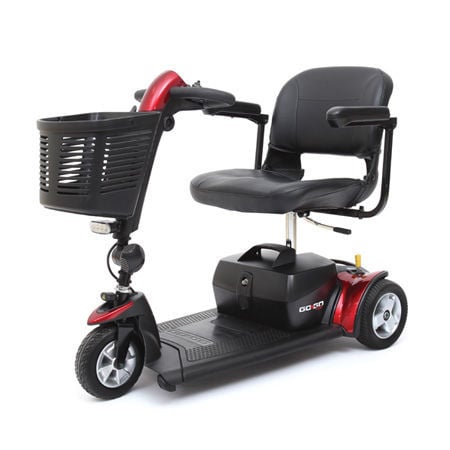
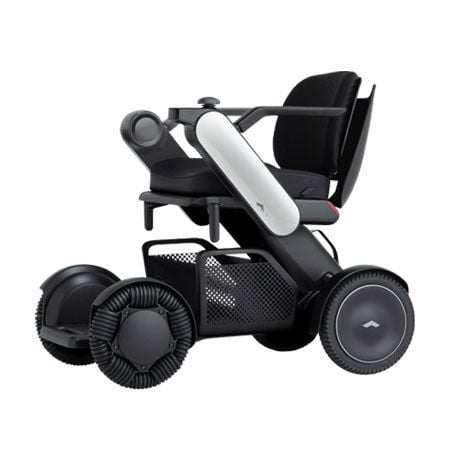
Air carriers must accept collapsible, battery-powered
wheelchairs as carry-on baggage on the same terms as those
for manual wheelchairs. That is, if the passenger with a disability
preboards and the on board storage space permits, the electric
wheelchair, including the nonspillable battery, must be stored
on board the aircraft. If the powered wheelchair is stored
in the aircraft's baggage compartment, the carrier must, whenever
feasible, secure the wheelchair in an upright position so
the batteries do not have to be separated from the wheelchair.
When it is necessary to detach a battery, the carrier must
provide packaging. If the wheelchair must be taken apart for
storage, a passenger with a disability may provide written
directions on how to disassemble and reassemble it. Under
no circumstances may wheelchair batteries be drained. A carrier
may require a passenger with a disability who is traveling
with a powered wheelchair to check in 1 hour prior to the
scheduled departure of the flight.
When can passengers expect to have their
wheelchairs removed from the baggage compartment and returned
to them?
The ACAA states that wheelchairs and other
assistive devices must be returned to their owners in a timely
manner and as close as possible to the airplane door. (Passengers
may also ask to have their wheelchairs and other devices returned
at the baggage claim area.) Personal mobility equipment must
be among the first items removed from the baggage compartment.
All assistive devices must be returned to their owners assembled
and in the same condition as when they were stored.
Airlines must give priority to wheelchairs
and other assistive devices in the plane's baggage compartment.
If this results in the bumping of luggage, the carrier must
make its best efforts to ensure that the bumped baggage reaches
its destination within 4 hours of the original arrival time.
Aircraft Accessibility
When did the requirements for accessible
aircraft become effective?
All aircraft ordered by an airline after
April 5, 1990, or delivered after April 5, 1992, must comply
with the ACAA's wheelchair-accessibility provisions.
Which types of airplanes must have accessible
lavatories?
Aircraft with more than one aisle and any
number of lavatories must have at least one that is accessible.
The lavatory must be designed so that a person using an on-board
wheelchair can enter, move within the room, and leave. Accessible
lavatories must provide the same degree of privacy as other
lavatories on the plane. All controls, locks, and dispensers
must be usable by passengers in wheelchairs and those with
manual impairments.
Do airlines have to renovate their aircraft
for the sole purpose of making them accessible to people with
disabilities?
Airlines do not have to retrofit their aircraft
to ensure accessibility. However, whenever a plane that does
not have accessibility features, such as movable aisle armrests
and accessible lavatories, is renovated and sections of the
cabin interior or lavatories are replaced, these sections
must be refitted with equipment that complies with the ACAA.
Which types of airplanes must provide
on-board wheelchairs?
Any plane with more than 60 passenger seats
and an accessible lavatory must provide an on-board wheelchair
if a passenger requests one 48 hours in advance. If less than
48 hours notice is given, the carrier must make a reasonable
effort to provide one without delaying the flight. On-board
wheelchairs must have removable footrests and armrests, passenger
restraints, backrests that permit flight attendants to assist
in transferring, and wheel locks. On-board wheelchairs must
be compatible with the dimensions of the aircraft so they
can be easily pushed, pulled, and turned within the cabin.
An aircraft with 100 or more seats must designate priority
space in the cabin for on-board wheelchair storage.
How does a passenger with a disability
find out about aircraft accessibility?
On request, airlines must make available
to any passenger the following information about the aircraft:
- the location of seats with movable aisle
armrests
- any limitations on the airplane's ability
to accommodate passengers with disabilities
- any limitations on the availability
of storage facilities for assistive devices
- whether the airplane has an accessible
lavatory
Service Accommodations
What types of general services must flight
personnel provide to passengers with disabilities?
When a passenger with a disability changes
planes, the delivering airline is responsible for assistance
in making flight connections and transferring between gates.
Airline personnel shall not leave unattended for more than
30 minutes any individuals in wheelchairs or other devices
that they cannot move independently.
When requested, flight personnel must help
passengers:
- move to and from seats while getting
on or off the airplane
- prepare for eating, for instance by opening
food packages (airline personnel do not have to help a passenger
eat)
- use an on-board wheelchair
- move to and from the lavatory (airline
personnel do not have to help any passenger within the restroom)
- store and retrieve carry-on luggage
May airlines charge for special accommodations
made for passengers with disabilities?
Carriers cannot charge for providing facilities,
equipment, or services required under the ACAA. They may,
however, charge for such optional services as use of an aircraft's
oxygen supply.
Handling Violations
Complaint Procedures
Who handles passenger complaints regarding
compliance with ACAA regulations?
Every carrier that operates scheduled service
must designate at least one Complaints Resolution Official
(CRO) to resolve ACAA complaints at each airport it serves.
The CRO must be available, either in person or by phone, at
all times the airline is operating at a given airport. When
CROs are available by phone, they must be able to communicate
by means of a TDD.
What must a CRO do to resolve a complaint?
The CRO must take direct action, either
personally or through another employee, to resolve any violations
of the ACAA. The CRO cannot, however, overturn a decision
made by the pilot-in-command based on safety concerns.
What happens when the CRO agrees with
the passenger that an airline has violated ACAA regulations?
If the CRO agrees with the passenger that
a violation of the ACAA has occurred, the CRO must provide
the passenger with a written statement summarizing the problem
and outlining what steps the carrier will take in response
to the violation, as well as the passenger's right to pursue
a complaint with the DOT.
What if the CRO determines that the airline's
actions were not in violation of the ACAA?
The CRO must still provide a written summary
of the determination and advise the passenger of his or her
right to file a complaint with the DOT.
When should the passenger expect to receive
the written statement from the CRO?
The complainant should receive the statement
immediately at the airport. If this is not possible, the CRO
must forward it to the passenger within 10 calendar days of
the complaint.
May passengers file written complaints
with the air carrier?
Air carriers must have procedures for resolving
written complaints concerning ACAA violations. Carriers are
not required to respond to any complaints postmarked more
than 45 days after the alleged violation. The airline must
respond to the complaint within 30 days after receiving it.
The response should summarize all the facts
and determinations concerning the complaint.
What information should a passenger include
in a written complaint?
Written complaints concerning suspected
violations of the ACAA should include:
- flight information, including name of
air carrier and number, date, and time of flight and connecting
flight, if applicable
- whether the passenger contacted a CRO
- the name of the CRO and the date contacted,
if applicable
- copies of any written response
received from the CRO
What other recourse is available to
passengers who believe that an airline has violated ACAA regulations?
Anyone who believes a carrier may have violated
ACAA regulations may contact the DOT at:
U.S. Department of Transportation
Aviation Consumer Protection Division, C-25
400 7th Street, SW
Washington, DC 20590
(202) 366-2220
(202) 366-0511 (TTY)
E-mail: airconsumer@ost.dot.gov
A formal complaint analogous to a civil
lawsuit may also be filed with the DOT. This complaint must
comply with specific rules of practice and be filed with the
Assistant General Counsel for Aviation Enforcement and Proceedings
at the DOT. A civil lawsuit filed in the appropriate court
may also be an option under the ACAA.
Conclusion
Under the ACAA, air travel for people with
disabilities will continue to improve as new, more accessible
airplanes and airports are constructed and as airlines train
their employees to be more sensitive to the needs of passengers
with disabilities. To take full advantage of these improvements
in accessibility, it is important for people with disabilities
to know their own responsibilities and rights as well as those
of the air carriers.
As we move toward a barrier-free society,
the United Spinal Association hopes that this booklet will
make air travel a more enjoyable experience for you. For more
information about the ACAA, contact the nearest United Spinal
Association office.
Guide Courtesy of United
Spinal Association |